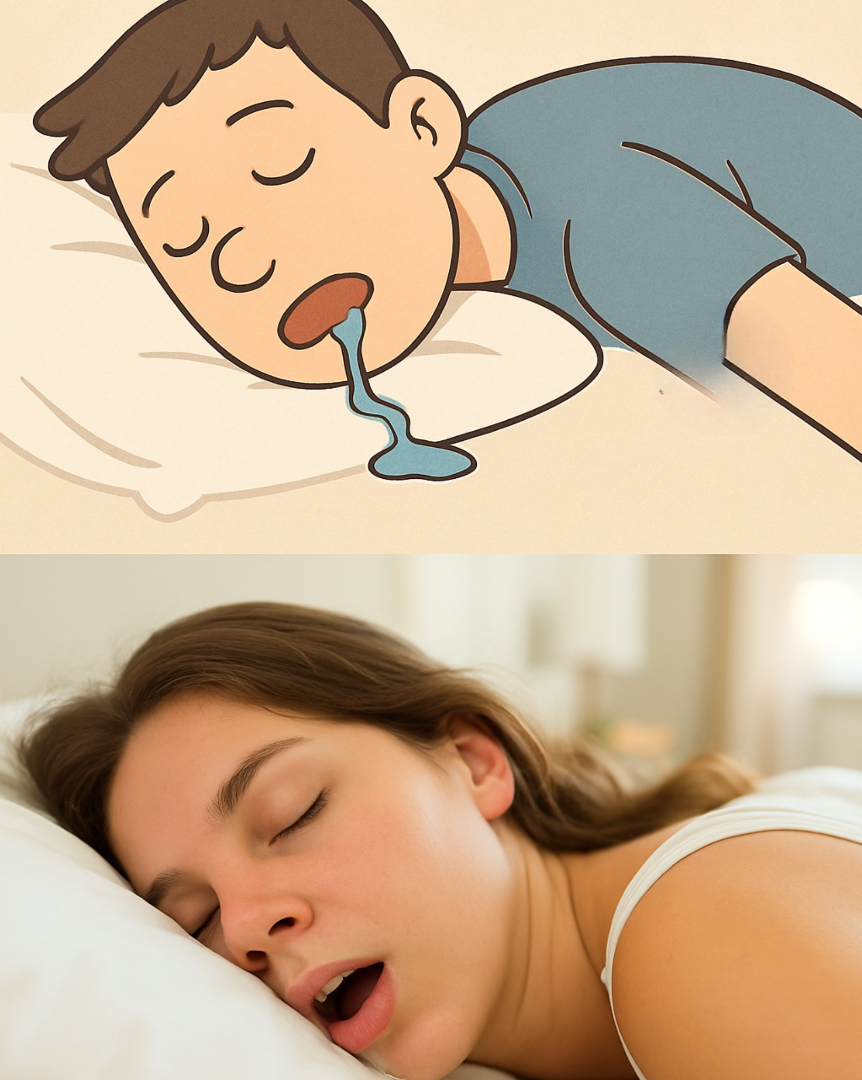
Deep sleep stages: During deep, restorative sleep, the muscles in your face and throat relax, including those controlling your mouth.
Nasal congestion: If your nasal passages are blocked, your brain encourages breathing through your mouth, increasing drooling.
What Drooling Says About Your Brain
Interestingly, drooling may indicate that your brain is in a deeply restorative phase of sleep. During this stage:
Your brain consolidates memories: Drooling often occurs during slow-wave sleep, the phase associated with memory and learning consolidation.
Muscle relaxation is at its peak: The muscles around your mouth relax completely, allowing saliva to escape.
Your parasympathetic nervous system is active: This “rest-and-digest” system is in control, promoting body repair, digestion, and overall recovery.
In short, drooling can be a sign that your brain is hard at work repairing itself, processing memories, and maintaining essential bodily functions.
Natural Ways to Support Sleep and Reduce Drooling
While occasional drooling is normal, excessive drooling can sometimes be managed with lifestyle adjustments and dietary habits. Here are some simple recipes and tips to help:
1 cup chamomile tea
1 tsp honey
Chamomile promotes relaxation and improves sleep quality, which may help regulate saliva production.
2. Warm Almond & Banana Smoothie
1 cup almond milk
1 ripe banana
½ tsp cinnamon
Almonds contain magnesium, a mineral that supports muscle relaxation, while bananas help regulate neurotransmitters for better sleep.
3. Light Evening Salad with Leafy Greens
Olive oil and lemon dressing
Leafy greens are rich in magnesium and potassium, aiding muscle control and overall nervous system function.
