I Didn’t Believe This Floor Trick Until I Tried It… Now I’ll Never Go Back
I’ll be honest: when I first saw the tip floating around online, I rolled my eyes.
“Add this to your mop water and your floors will stay clean for a whole week?”
But curiosity has a funny way of getting the best of us—especially when you’re staring at floors that never seem to stay clean for more than a day. Between everyday foot traffic, dust, crumbs, and mystery smudges that appear out of nowhere, keeping floors spotless can feel like a losing battle.
Still, one afternoon with nothing to lose and a bucket already filled, I decided to try it.
What happened next completely changed the way I clean my floors.
The Never-Ending Floor Problem
If you’ve ever mopped your floors only to find them looking dull, streaky, or dirty again the next day, you’re not alone.
No matter how often we clean, floors seem to attract:
- Dust and pet hair
- Footprints and shoe marks
- Sticky residue from spills
- That strange “film” that makes floors look cloudy
Many store-bought floor cleaners promise shine and long-lasting freshness, but in reality, they often leave behind residue that actually attracts more dirt.
That was my biggest frustration. I wasn’t just cleaning—I was setting my floors up to get dirty faster.
The Tip I Didn’t Believe
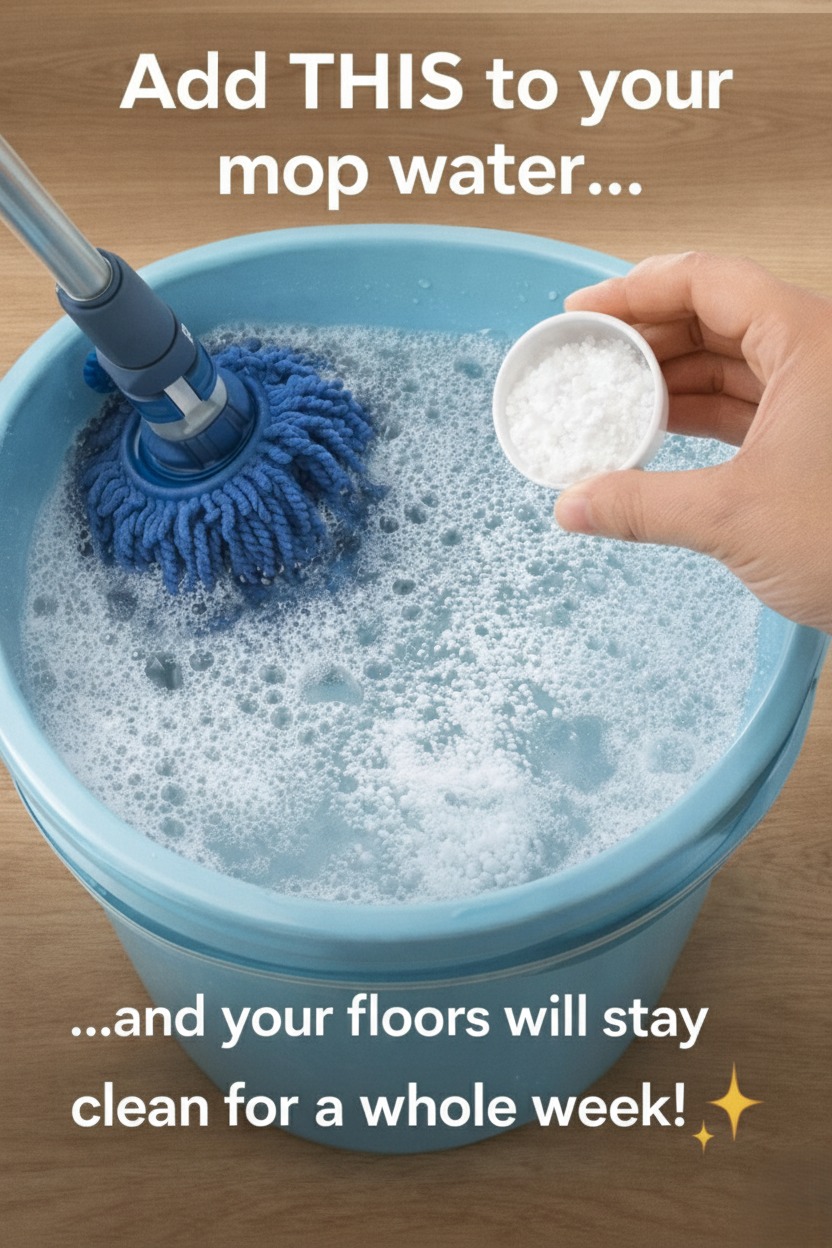
The image that stopped me mid-scroll showed a simple mop bucket filled with water, a mop, and a small scoop of white powder being added in.
“Add THIS to your mop water… and your floors will stay clean for a whole week!”
The “mystery ingredient” wasn’t some expensive cleaner or secret chemical.
It was baking soda.
Yes. The same baking soda that lives quietly in your kitchen cabinet.
I laughed at first. Baking soda? For floors?
But then I started reading comments. Hundreds of them. People claiming:
- Less dirt buildup
- No sticky residue
- Cleaner floors for days
- No harsh smells
At that point, skepticism turned into curiosity.
Why Baking Soda Works on Floors
Baking soda (sodium bicarbonate) has a few properties that make it surprisingly effective for floor cleaning:
1. It Neutralizes Odors
Unlike fragranced cleaners that just mask smells, baking soda neutralizes odors at the source. This is especially helpful for kitchens, entryways, and homes with pets.
2. It Gently Breaks Down Grime
Baking soda is mildly abrasive—but gentle enough not to scratch most sealed floors. It helps loosen stuck-on dirt without damaging surfaces.
3. It Leaves No Sticky Residue
Many commercial cleaners leave behind soap or waxy residue. Baking soda dissolves fully in water, meaning floors dry cleaner and stay cleaner longer.
4. It’s Non-Toxic and Affordable
No harsh chemicals. No overwhelming fumes. Just a simple, budget-friendly ingredient that’s safe for everyday use when used properly.
That alone made me willing to give it a shot.
How I Tried the Floor Trick (Step-by-Step)
I kept it simple. No fancy tools. No special mop.
What I Used:
- A bucket of warm water
- 1 tablespoon of baking soda
- A standard microfiber mop
That’s it.
The Process:
- I filled the bucket with warm (not hot) water
- Added one tablespoon of baking soda
- Stirred until fully dissolved
- Mopped as usual—no soaking the floors
- Let the floor air-dry
No rinsing. No extra steps.
What I Noticed Immediately
Within minutes, I could tell something was different.
The Water Stayed Cleaner
Normally, mop water turns murky fast. This time, it stayed clearer longer, even after cleaning high-traffic areas.
No Strong Smell
There was no overpowering “cleaner scent”—just a neutral, fresh smell that felt genuinely clean.
Faster Drying
The floors dried faster than usual and didn’t feel slippery or sticky afterward.
But the real test came later.
The Next Day… and the Day After That
The next morning, I expected to see:
- Footprints
- Dust buildup
- That familiar dull haze
Instead, the floors still looked freshly cleaned.
By day three, I was officially impressed.
By day five, I was convinced.
My floors weren’t just clean—they were staying clean. Dirt didn’t cling the way it normally did, and sweeping up took half the time.
Why Floors Stay Cleaner Longer
Here’s what I realized:
Clean floors aren’t just about removing dirt—they’re about not leaving behind anything that attracts dirt.
Soap residue, waxes, and oils create a surface that dust sticks to. Baking soda doesn’t do that. It cleans, neutralizes, and disappears.
That’s the secret.
Which Floors This Works Best On
This method works best on:
- Tile
- Vinyl
- Laminate (lightly damp mop only)
- Sealed hardwood
- Linoleum
⚠️ Important note:
Avoid using baking soda on:
- Unsealed wood
- Waxed floors
- Natural stone like marble or granite
Always test in a small area first.
Common Mistakes to Avoid
If you try this trick, keep these tips in mind:
Don’t Use Too Much
More is not better. One tablespoon per bucket is enough.
Don’t Mix with Harsh Cleaners
Never mix baking soda with bleach or strong chemical cleaners.
Don’t Over-Wet Floors
A damp mop works better than a soaking one.
Why I’ll Never Go Back to Store-Bought Cleaners
After using this method for a few weeks, I noticed:
- Less frequent mopping
- No residue buildup
- Floors that felt cleaner underfoot
- Fewer harsh chemicals in my home
And honestly? There’s something satisfying about knowing a simple, affordable ingredient works better than expensive products.
Final Thoughts
I didn’t believe this floor trick at first.
It sounded too simple.
Too easy.
Too good to be true.
But sometimes, the best solutions aren’t new—they’re just forgotten.
Now, every time I mop, I reach for baking soda instead of a bottle of cleaner. And every time my floors stay clean longer than expected, I smile.
Because this time, the internet was right.
