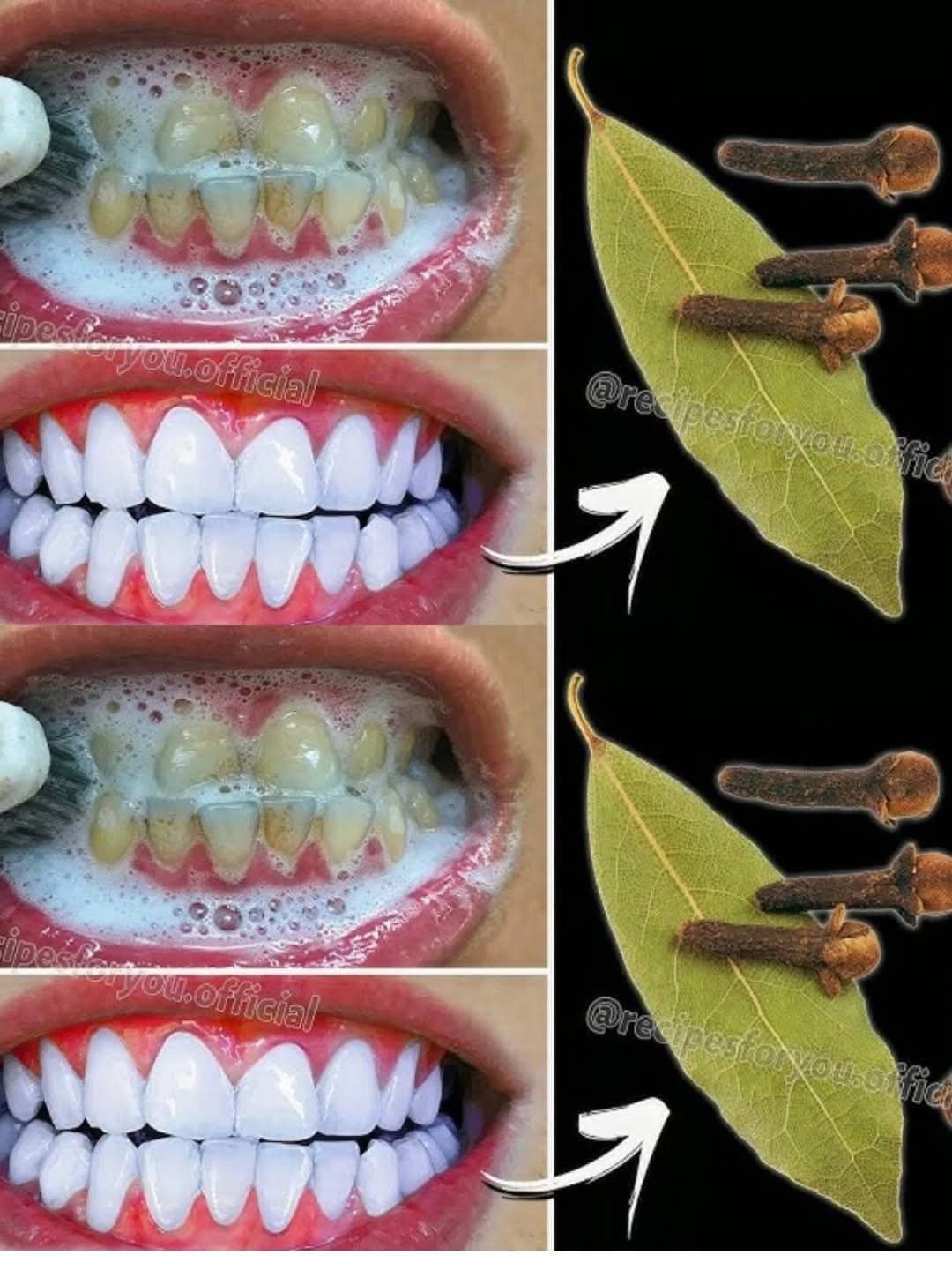
Here’s the scientific truth:
- Bay leaves have no bleaching properties
- They do NOT penetrate enamel
- They cannot remove deep intrinsic stains
- Any “whitening” seen online is just surface cleaning
True whitening requires peroxide-based agents such as:
- Hydrogen peroxide
- Carbamide peroxide
⚠️ Safety Tips for Using Bay Leaves on Teeth
Bay leaves are natural, but not risk-free.
✔️ Safe in moderation
As an occasional part of an oral-care routine.
❌ Don’t rub raw leaves aggressively
They are abrasive and can scratch enamel.
❌ Don’t swallow large amounts
Bay leaves contain concentrated essential oils.
🦷 Never replace brushing or flossing
Natural remedies are add-ons, not substitutes.
👨⚕️ Consult your dentist
Especially if you have veneers, crowns, sensitivity, or gum issues.
💡 Better Natural Ways to Brighten Your Smile
If you want real results without harsh chemicals, try:
1. Coconut oil pulling
Reduces plaque and may improve brightness.
2. Brushing with baking soda (1–2× per week)
3. Crunchy fruits & vegetables
Apples, carrots, and celery mechanically scrub the teeth.
4. Reduce stain-causing foods/drinks
Coffee, red wine, soda, dark berries, tobacco.
5. Stay hydrated
Helps wash away acid and prevent discoloration.
For visible whitening results:
👉 Use dentist-approved whitening strips or gels.
👉 Or consider professional whitening treatments.
❤️ Final Verdict: Bay Leaves Are Helpful — But Not for Whitening
Bay leaves offer many oral health benefits:
fresh breath, reduced bacteria, and mild cleaning.
But when it comes to natural teeth whitening, bay leaves are more myth than miracle.
They can support your routine…
but they will not give you a whiter smile.
